
What is an acronym? It is an abbreviation formed from the initial letters of other words and pronounced as a word, and there are many of these that we use in our culture without even thinking about it. For example, in the military you have P.O.W. (Prison Of War). In science you have NASA (National Aeronautics and Space Administration). In sports you have the NFL (National Football League). In TV and entertainment you have ABC (American Broadcasting Company), and in our conversations we have BTW (By The Way) and LOL (Laughing Out Loud)…as you attach your emoji smily face to your text messages 🙂
But from a faith standpoint, one of the more recent acronyms that has popped up is “OMG.” What does “OMG” mean? It translates “O My God.” As people who value and reverence the name of God, we may wonder if this is an offense against God. Yes. When spoken in a careless, vain way it is an offense against God.
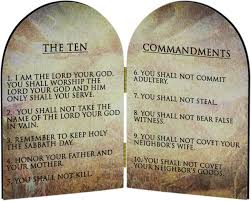
What does the second commandment say? “You shall not invoke the name of the LORD, your God, in vain. For the LORD will not leave unpunished anyone who invokes his name in vain” (Ex. 20:7, Dt. 5:11). To say the name of God, the Father; the name of Jesus, or the name of the Holy Spirit in a vain way is wrong and thus a sin. To say it’s sinful is not scrupulous or too strict. Rather, it’s a command given to us from our loving and merciful God who asks us to honor His name. Hopefully, our response to God, who blesses and provides for us, is one that freely wants to abide by it. We honor our own names and our family name with great respect. Don’t we? Why wouldn’t we do the same for God and even more so for Him? Even our ancestors in faith, the Israelites, had incredible reverence for God’s holy name, “Yahweh.” They thought it was so holy that they would not even pronounce it nor even spell it out completely (YHWH – what is referred to as the “Tetragrammaton”).
What about just saying the abbreviation or acronym, “OMG,” rather than saying the whole thing out loud? I wouldn’t recommend it, because we know what it leads to and what it refers. Instead, use a substitute. Some people say, “O my gosh” or “O my goodness.” We could say that or something else. Let’s use our imagination. We have thousands of words available to us that we could use in place of God’s name. If we cringe at hearing God’s name said in vain, it’s a good sign that we have a well-formed conscience and that we recognize the wrongdoing and sinfulness of the improper use of it. If we say God’s name in vain, intentionally, or even accidentally as a knee-jerk reaction when we hurt ourselves, go to confession and confess it and any other sins that the Holy Spirit may be prompting us to confess.
Below is a “Top 10 List” of what our Catechism teaches us on this topic.
1. “The Lord’s name is holy.” For this reason man must not abuse it. He must keep it in mind in silent, loving adoration. He will not introduce it into his own speech except to bless, praise, and glorify it” (#2143).
2. “Respect for his name is an expression of the respect owed to the mystery of God himself and to the whole sacred reality it evokes” (#2144).
3. “Preaching and catechizing should be permeated with adoration and respect for the name of our Lord Jesus Christ” (#2145).
4. “The second commandment forbids the abuse of God’s name, i.e., every improper use of the names of God, Jesus Christ, but also of the Virgin Mary and all the saints” (#2146).
5. Other situations connected to and contrary to the second commandment are promises, blasphemy, oaths, and perjury (#s 2147-2155).
6. St. Augustine once said, “[God’s] name is great when spoken with respect for the greatness of his majesty. God’s name is holy when said with veneration and fear of offending him” (#2149).
7. “The name one receives is a name for eternity. In the kingdom, the mysterious and unique character of each person marked with God’s name will shine forth in splendor. ‘To him who conquers . . . I will give a white stone, with a new name written on the stone which no one knows except him who receives it.’ (Rev. 2:17). ‘Then I looked, and Lo, on Mount Zion stood the Lamb, and with him a hundred and forty-four thousand who had his name and his Father’s name written on their foreheads’” (Rev. 14:1; #2159).
8. “False oaths call on God to be witness to a lie. Perjury is a grave offense against the Lord who is always faithful to his promises” (#2163).
9. “In Baptism, the Christian receives his name in the Church. Parents, godparents, and the pastor are to see that he be given a Christian name. The patron saint provides a model of charity and the assurance of his prayer” (#2165).
10. “The Christian begins his prayers and activities with the Sign of the Cross: “in the name of the Father and of the Son and of the Holy Spirit. Amen.” (#2166).
While we can be desensitized to culture and media that have little regard for the name of the Lord, let’s resist that temptation, and instead honor God’s name with tremendous reverence as we should. The Catechism says, “‘God calls each one by name’ (Is. 43:1). Everyone’s name is sacred. The name is the icon of the person. It demands respect as a sign of the dignity of the one who bears it” (#2158). May we respect the dignity and name of each person, but especially respect and revere the name of God. Let us watch our speech and renew our honor to the Lord’s name whose name is most sacred.”O Lord, our Lord, how majestic is your name in all the earth” (Ps. 8:1)! Amen.
– Fr. Jeff
Resources:
Bible: Ex. 20: 7, Dt. 5:11
Catechism #s 2142 – 2167

 "Speak The Truth with Love," A Catholic Blog by Fr. Jeff Allan
Love your content Fr. Allan, very well-written!
“Thou shalt not make unto thee any graven image,
or any likeness of anything that is in heaven above,
or that is in the earth beneath, or that is in the water under the earth.”
Exodus 20: 4
You may also check my blog about The Second Commandment
Hope this will also help. Thank you.
LikeLike